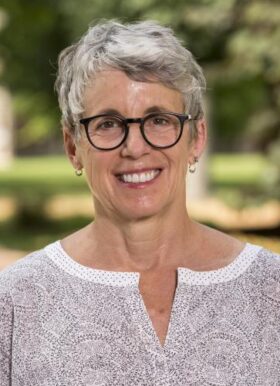
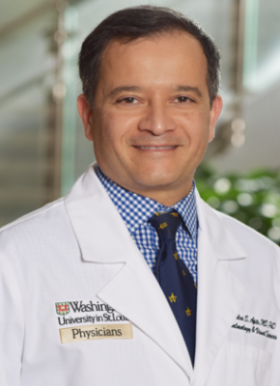
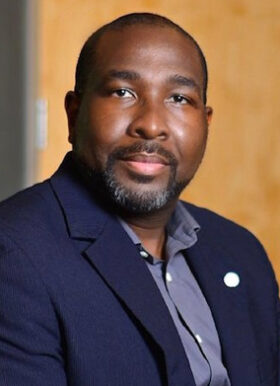
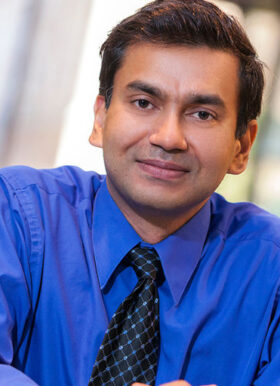
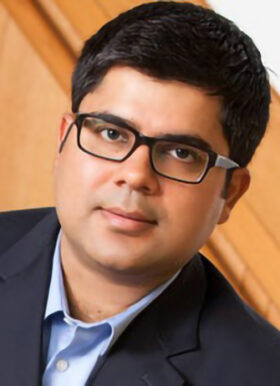
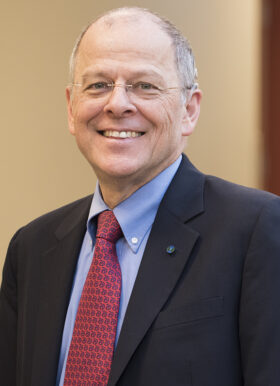
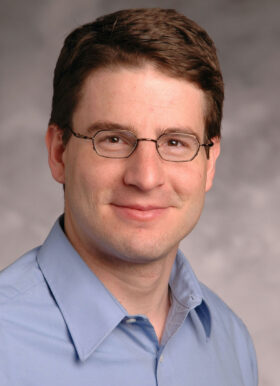
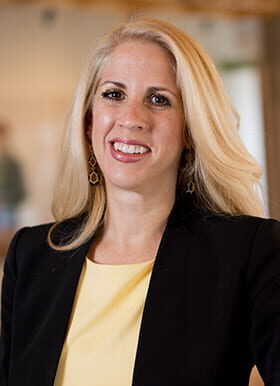
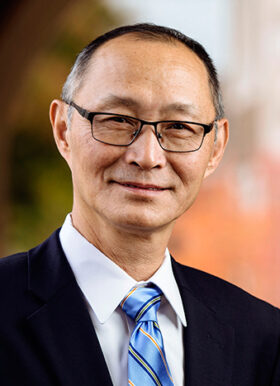
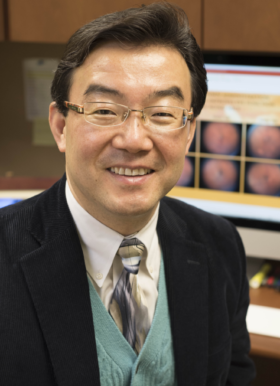
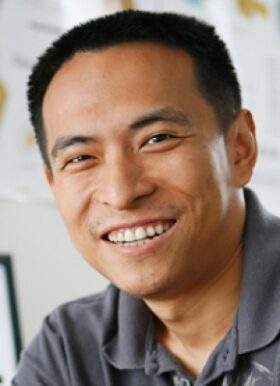
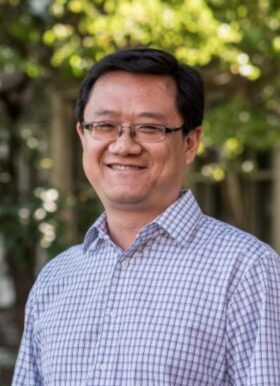
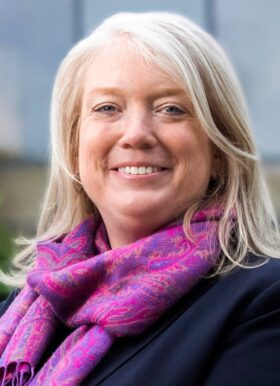
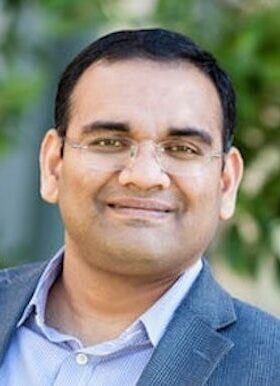
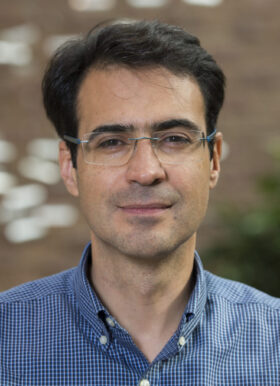
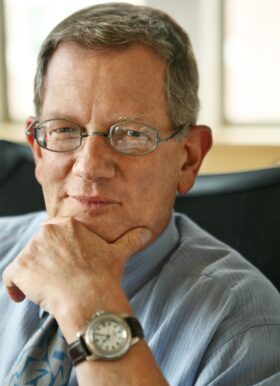
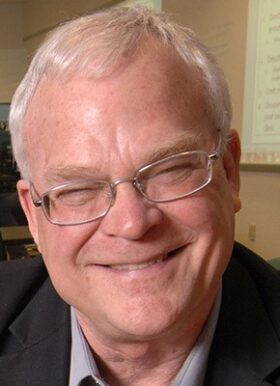
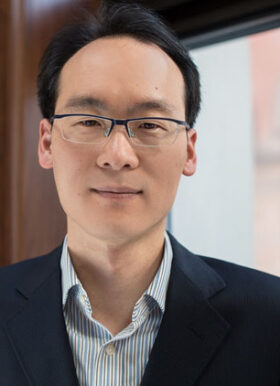
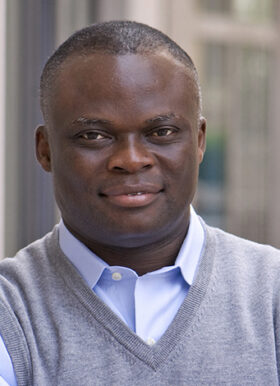
Each Scholar in the McDonnell Academy is mentored by an Ambassador, appointed by Chancellor Mark S. Wrighton and the Academy, who serves to assist in the development of the Scholar's academic and professional life at Washington University in St. Louis. Each mentor is also an Ambassador to the Scholar's alma mater and country, responsible for building relationships with the University Partner, and with alumni, friends, corporations, and government entities in that country. The Ambassadors regularly visit their respective University Partner to host alumni events, information sessions, and meetings with key university contacts. The Ambassador also identifies opportunities for Scholarly collaboration involving other faculty and students of Washington University and of the partner research university.

Ambassador to the University of Ghana, Jean Allman is the J.H. Hexter Professor in the Humanities and Chair of the Department of History. She earned her Ph.D. in African History from Northwestern University in 1987. Her area of specialization is Ghana, where she has spent considerable time as a research scholar since the 1980s, affiliated with the University of Ghana's Institute of African Studies and its Department of History. Allman's research has been supported by the NEH, the ACLS, Fulbright-Hays, and the SSRC. Her recent books include Tongnaab: The History of a West African God and Fashioning Africa: Power and the Politics of Dress. Allman is currently working on a book project tentatively entitled, A Country of the Future: Ghana and the Making of the Post-Colonial World. Before coming to Washington University, Allman directed the University of Illinois' Title VI Center for African Studies. She has served on the Board of Directors of the African Studies Association and as Treasurer of the Association for the Study of the Worldwide African Diaspora (ASWAD). In addition to her scholarly and administrative work, she has co-edited two prize-winning African history book series and recently completed six years as co-editor of the Journal of Women's History.

Ambassador to the Indian Institute of Technology Bombay, Pratim Biswas is the Stifel and Quinette Jens Professor of Environmental Engineering Science and Chairman of the Department of Energy, Environmental, and Chemical Engineering at Washington University. He received his B.S. from the Indian Institute of Technology Bombay, in Mechanical Engineering, his M.S. from the University of California–Los Angeles, and his Ph.D. from the California Institute of Technology in 1985. His research interests are in aerosol science and technology, nanoparticle technology, environmental nanotechnology, air quality and pollution control, environmentally benign energy production, and environmental science and engineering, and he has published more than 200 papers in his field. Biswas has served on several national committees and was the conference chair for the 15th Annual Meeting of the American Association for Aerosol Research and chair of the Critical Review Committee of the Air and Waste Management Association. He has also served on the board of directors of the American Association for Aerosol Research and was the treasurer, and an associate editor of the Aerosol Science and Technology Journal. In 2006-2007, he served as the president of the American Association for Aerosol Research. Professor Biswas has had continual interactions with faculty in IIT Bombay, and one of his doctoral graduates is now a faculty member there.

Ambassador to the University of Indonesia, John Bowen is the Dunbar-Van Cleve Professor in Arts & Sciences at Washington University. He received his B.A. from Stanford University, did graduate studies at the école Pratique des Hautes études, Paris, and received his Ph.D. in Anthropology from the University of Chicago. Bowen studies problems of pluralism, law, and religion, and in particular contemporary efforts to rethink Islamic norms and law in Asia, Europe, and North America. His long-term fieldwork has been in Indonesia, particularly in Aceh, and is most recently reflected in his book Islam, Law and Equality in Indonesia: An Anthropology of Public Reasoning (Cambridge, 2003). His book on Islam and the state in France, Why the French Don't Like Headscarves, was published by Princeton in 2006. He has held several positions in professional organizations including: associate editor of American Anthropologist, president of the Association for Political and Legal Anthropology, and member of the editorial board of Studia Islamika (Jakarta). Professor Bowen has been a fellow at the Center for Advanced Study in the Behavioral Sciences, received the Herbert Jacobs Book Prize from the Law & Society Association, and is currently a Carnegie Scholar.

Ambassador to University of Queensland, Graham A. Colditz, M.D., DrPH is the Niess-Gain Professor of Surgery, Professor of Medicine; Chief, Division of Public Health Sciences, Department of Surgery; Deputy Director, Institute for Public Health, Washington University in St. Louis and Member, Institute of Medicine. He obtained his medical degree from University of Queensland and his Doctor of Public Health degree from Harvard School of Public Health. Dr. Colditz is an internationally-known epidemiologist and Associate Director for Prevention and Control at the Alvin J. Siteman Cancer Center, Washington University School of Medicine and Barnes-Jewish Hospital, St.Louis, Missouri. Dr. Colditz's leadership has broadened the scope of prevention research, education and community outreach and markedly raised the profile of the Washington University School of Medicine’s public and population health initiatives. With a commitment to identifying preventable causes of chronic disease among women and adolescents, Dr. Colditz continues to study benign breast disease and other markers for risk of breast cancer. He developed the award-winning Your Disease Risk website (www.yourdiseaserisk.wustl.edu) which communicates tailored prevention messages to the public. He has published over 850 peer-reviewed publications, six books and six reports for the Institute of Medicine, National Academies of Health. He was the editor-in-chief of the journal Cancer Causes and Control and has contributed to reports of the Surgeon General on Tobacco and Health. He has served on several committees for the National Academies of Science and the National Cancer Institute, among others. In October 2006, on the basis of professional achievement and commitment to public health, Dr. Colditz was elected to membership of the Institute of Medicine, an independent body that advises the U.S. government on issues affecting public health.
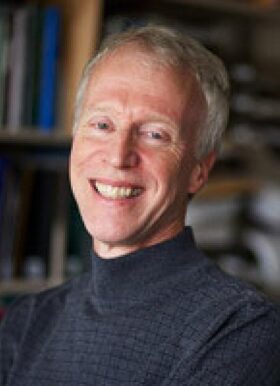
Ambassador to State University of Campinas (UNICAMP), Matthew James Ellis, M.D. is the Anheuser-Busch Professor of Medical Oncology in the Siteman Cancer Center, and the School of Medicine at Washington University. After obtaining his medical degree at Cambridge University and Ph.D. at the University of London, Dr. Ellis completed his professional training at hospitals in the UK and USA. He has received American Board of Internal Medicine certification in Medical Oncology. Dr Ellis' primary research interests include the identification of genes that affect responses and resistance to endocrine therapy in patients with breast cancer. Dr Ellis is an elected Fellow of the Royal College of Physicians in London; he is Vice Chair for the Cancer and Leukemia Group B Breast Cancer Committee and holds the Anheuser Busch Chair in Medical Oncology at Barnes Jewish Hospital. In addition, Dr Ellis is Chair of the Medical Oncology Committee for the American College of Surgeons Oncology Group. He is also a member of several National Cancer Institute review panels, journal editorial committees and advisory boards, and has published over 70 papers in peer-reviewed journals, as well as authoring over 20 book chapters and review articles in oncology. Dr. Ellis travels frequently to Brazil, where he has both professional and family ties.

Ambassador to National Taiwan University, Tuan-Hua David Ho is a Professor in the Plant Biology, Developmental Biology, and Molecular Genetics programs of the Division of Biological and Biomedical Sciences at Washington University. He received his B.S. in botany from National Taiwan University in Taipei, Taiwan, and a Ph.D. in biochemistry from Michigan State University. Professor Ho joined the faculty of Washington University in 1984 as an Associate Professor and has served as the Associate Chair of the Department of Biology. From 2004–2007 he was on leave from Washington University and appointed distinguished research fellow and director of the Institute of Plant and Microbial Biology for Academia Sinica in Taipei, Taiwan. He rejoined the department of biology in January 2008 as a professor of biology. Professor Ho studies the hormonal control of seed germination, in particular, the role of hormones in allowing plants to be resistant to environmental stresses such as drought and cold. He studies the regulation of genes that play a role in stress responses in plants, and in mediating stress tolerance. He is an academician of Academia Sinica, Taiwan; a fellow of the American Academy of Arts and Sciences; and a fellow, TWAS, the Academy of Sciences for the Developing World.

Ambassador to University of Melbourne, Dr. Inder is a dual boarded child neurologist and neonatologist, who directs clinical and translational research into the nature and timing of brain injury in the preterm and high risk term born infant. She is the director of the Washington University Neonatal Development Research (WUNDER) team and the Washington University Intellectual and Developmental and Disabilities Research Center (WUIDDRC). The WUNDER team conducts multidisciplinary research initiatives in pediatrics, neurology, radiology, obstetrics, and psychology centering back on studies at the bedside of newborn infantsin the neonatal and pediatric intensive care unit at St Louis Children's Hopital. The team focuses on efforts in the premature infant, the sick term infant, and the infant with cardiac diseases. This research utilizes state of the art technologies in magnetic resonance (MR) imaging and electroenecephalography (EEG) as tools to assist in understanding the timing and nature of brain injury in the newborn infant. The WUIDDRC consists of 4 research cores in imaging, neuropsychology and genetics, animal models, biostatistics and bioinformatics to accelerate research findings in infants and children both at risk and with developmental disabilities. The center is funded by the National Institute of Health and supports over 50 investigators in addition to a central role in advocacy and support for children with developmental disabilities. Finally, Dr. Inder holds a Doris Duke Distinguished Clinical Scientist Award to assist her passion in the mentoring of young clinical scientists.

Ambassador to Tsinghua University, Tao Ju is Associate Professor of Computer Science and Engineering at Washington University. Before joining the faculty of Washington University in 2005, he received his B.A. in English Language and B.S. in Computer Science from Tsinghua University, and his M.S. and Ph.D. in Computer Science from Rice University. He conducts research in computer graphics, in particular the construction, processing and analysis of geometric models from real-world data. He also works extensively on applying geometric modeling to biomedicine. He serves on the editorial boards of a number of journals, and has co-organized international conferences and workshops. He was a recipient of the Early Career Award (CAREER) from the National Science Foundation. Besides serving as the Ambassador to Tsinghua University, he also serves as the President of the Tsinghua Alumni Association in St.Louis.

Ambassador to Seoul National University, Young-Shin Jun is an associate professor of Energy, Environmental and Chemical Engineering at Washington University, where she leads the Environmental NanoChemistry Laboratory (http://encl.engineering.wustl.edu/). She received her B.S. (1997) and M.S. (1999) in Environmental Science and Engineering at Ewha Womans University in Seoul, Korea. She holds an S.M. and received a Ph.D. in Environmental Chemistry from Harvard University in 2005. Prior to taking her position at Washington University, she conducted postdoctoral research in Nanogeoscience at the University of California at Berkeley/Lawrence Berkeley National Laboratory, Berkeley (2005-2007). Professor Jun is a 2011 U.S. National Science Foundation CAREER award recipient. Her research focuses on environmental interfacial reactions in dynamic, complex aqueous systems. Her research group's projects aim at providing more environmentally sustainable CO2 sequestration strategies, improving our understanding of the fate and transport of nanoparticles and contaminants, and elucidating physicochemical reaction mechanisms occurring during water reuse through aquifer storage, treatment, and recovery to secure underground sources for drinking water. She is on the Editorial Board of the Royal Society of Chemistry's Environmental Science: Processes & Impacts. She also served as the lead guest editor of a 2013 special issue on geologic CO2 sequestration of the Environmental Science & Technology.
Sándor J. Kovács, Jr.

Ambassador to Budapest University of Technology and Economics, Sándor J. Kovács, Jr. is a professor of medicine, cell biology and physiology, biomedical engineering, and physics at Washington University. He received his B.S. in analytical engineering at Cornell University, and he studied theoretical physics at the California Institute of Technology, where he received his Ph.D. in 1977. He received his M.D. from the University of Miami in 1979. Following his internship, residency, and cardiology fellowship at Barnes Hospital in St. Louis, he joined the Department of Internal Medicine at Washington University as a member of the Cardiovascular Division. Professor Kovács is Director of the Cardiovascular Biophysics Laboratory, which he founded in 1990. His research focuses on theoretical and applied problems in human cardiovascular physiology and biophysics using physical principles. He has published extensively in these areas and has served on numerous NIH, AHA, and other panels. He is the president of the Cardiovascular System Dynamics Society, an international society of cardiovascular physiologists and academic cardiologists. His research has been supported by the NIH, Veterans Administration, AHA, The Whitaker Foundation, The Barnes-Jewish Hospital Foundation and the Alan A. and Edith L. Wolff Charitable Trust. Professor Kovács was born in Hungary, he and his family escaped after the 1956 Hungarian Revolution, eventually arriving in New York City.

Ambassador to Fudan University, James T. Little is the Donald Danforth, Jr. Distinguished Professor in the Olin Business School at Washington University. He received a B.S. in commerce from the University of British Columbia and his Ph.D. from the University of Minnesota. He served on the faculty of the department of economics from 1971–1982 and then joined the faculty of the Olin Business School. From 1983–1989, he served as associate dean for academic affairs. He is academic director of the Olin Business School's EMBA program both in St. Louis and in Shanghai, and directs the school's London summer program in international finance. Little's current research interests include the implications of globalization for corporate strategies, the economies of the European Union and China, and regulation of insurance companies. In 2002, Little received a Distinguished Faculty Award from the Alumni Association of Washington University. His extensive experience as a lecturer in executive programs includes teaching in China as well as lectures in Europe. Little is also a director and member of the executive committee of Millers First Insurance Companies and has served on the boards of several civic and not-for-profit institutions.

Ambassador to Korea University, Charles R. McManis is the Thomas and Karole Green Professor of Law and Director of the Intellectual Property & Technology Law Program at Washington University. He received his B.A. from Birmingham-Southern College in 1964, and both his M.A. (in philosophy) and J.D. from Duke University in 1972. McManis has been a frequent visiting lecturer and paper presenter at universities and academic conferences throughout the United States, Asia, Europe, and in South America. During 1993 and 1994, he was a Fulbright Fellow in Korea, where he lectured and conducted research at the International Intellectual Property Training Institute in Taejon. He has served as a consultant for the World Intellectual Property Organization, in India, Korea, and Oman, and in 2002 he presented a paper at a Joint WIPO/UPOV Symposium in Geneva, Switzerland, on the Co-existence of Patents and Plant Breeders' Rights. McManis' book, Intellectual Property & Unfair Competition in a Nutshell , is now in its fifth edition. He is also co-author of Licensing Intellectual Property in the Information Age , the second edition of which was published in 2005 by Carolina Academic Press. He is also the editor of a multi-authored volume, entitled Biodiversity and the Law: Intellectual Property, Biotechnology and Traditional Knowledge (Earthscan/James & James 2007).

Ambassador to University of Hong Kong, Nancy Morrow-Howell is the Ralph and Muriel Pumphrey Professor of Social Work in the George Warren Brown School of Social Work at Washington University. In January, 2012, she was appointed Director of the Harvey A. Friedman Center for Aging at Washington University. Dr. Morrow-Howell is a national leader in gerontology, widely known for her work on productive and civic engagement of older adults. She is editor of the book Productive Aging, published by Johns Hopkins University Press. With support from private foundations and the National Institute on Aging, she explores strategies to maximize the engagement of older adults in productive roles. Dr. Morrow-Howell is a fellow of the Gerontological Society of America (GSA), past chair of the Social Research, Policy, and Program (SRPP) section of the GSA, past-vice president of the Association for Gerontological Education in Social Work (AGE-SW), and actively involved with the John A. Hartford Geriatric Social Work Initiative. She is on the Editorial Board of several top journals in gerontology. She was the recipient of the 2011 Career Achievement Award from the Association for Gerontology Education in Social Work, the 2012 Author Holly Compton Faculty Award from Washington University, and the 2013 Distinguished Career Achievement Award from the Society for Social Work and Research.

Ambassador to Jawaharlal Nehru University, Himadri B. Pakrasi is the Myron and Sonya Glassberg/Albert and Blanche Greensfelder Distinguished University Professor and director of the International Center for Advanced Renewable Energy and Sustainability (ICARES). He was born in Calcutta, India, and received undergraduate and graduate training in physics at the Presidency College and University of Calcutta. He came to the U.S. to study biology and received a doctorate at the University of Missouri-Columbia in 1984. He has been on the faculty of Washington University since 1987. Pakrasi is a biochemist recognized for his work on photosynthesis and, in particular, on membrane protein complexes in cyanobacteria and plant chloroplasts. He has a keen interest in bridging the differences between the biological and physical sciences, and leads large-scale multi-institutional systems biology projects. He currently directs Washington University's effort to develop groundbreaking initiatives in the area of bioenergy. Pakrasi has been an Alexander von Humboldt Fellow at Munich University, Germany; a Distinguished Fellow at the Biosciences Institute, Nagoya University, Japan; and a Lady David Visiting Professor at the Hebrew University, Jerusalem, Israel. He is a Fellow of the American Association for the Advancement of Science.

Ambassador to China Agricultural University and Peking University, Ralph S. Quatrano is the Spencer T. Olin Professor and dean of the School of Engineering & Applied Sciences at Washington University. He assumed the chair of the executive council of the Division of Biology and Biomedical Sciences at Washington University in July 2005 and was named dean of the School of Engineering in 2010. Quatrano received his undergraduate degree from Colgate University and a Ph.D. in biology from Yale University. He then held positions at Oregon State University, Dupont's Central Research and Development Department in Wilmington, DE, and the University of North Carolina–Chapel Hill before joining the faculty of Washington University in 1998. Professor Quatrano's research focuses on the cellular and molecular mechanisms controlling how plants develop, especially how they respond to stress. He has served as the editor-in-chief of The Plant Cell (1998–2003) and on the board of reviewing editors for Science from 1991–1998. He has been a member of several boards of plant science based companies, has received several awards for outstanding teaching, and has mentored over 40 students. He is the author of over 140 research articles and routinely presents his findings at major national and international meetings. The former president of the Chinese Agricultural University (Dr. Zhangliang Chen) is a long time friend, having shared similar research interests in plant and agricultural sciences.

Ambassador to Yonsei University, K. Daniel Riew is the Mildred B. Simon Distinguished Professor and Chief of Cervical Spine Surgery in the department of orthopedic surgery at the School of Medicine. He has a joint appointment as a professor of neurological surgery. He immigrated to the United States from Korea with his family in 1966, when he was seven years old. He received his undergraduate degree from Harvard College (AB, 1980) and his M.D. from Case Western Reserve University (1984). He has board certification both in Internal Medicine and Orthopedic Surgery. He has published extensively and has won numerous research awards. His current research interest focuses on artificial cervical disc replacements. He joined the faculty at Washington University and Barnes-Jewish Hospital in 1995. In 2006, he established the Orthopedic-Rehab Institute for Cervical Spine Surgery, exclusively dedicated to treating cervical spine disorders. He lectures extensively worldwide and has been a visiting professor both nationally and internationally. He is recognized in the Best Doctors in America, America's Top Doctors, and America's Top Orthopedists lists.

Ambassador to Technion-Israel Institute of Technology, Yoram Rudy is the Fred Saigh Distinguished Professor of Engineering and director of the Cardiac Bioelectricity and Arrhythmia Center (CBAC) at Washington University. He is a professor in the departments of biomedical engineering, cell biology & physiology, medicine, radiology, and pediatrics. Rudy earned a B.Sc. in 1970 from the Department of Physics at the Technion-Israel Institute of Technology. He continued his studies at the Technion, receiving his M.Sc. in 1973. That same year, he came to the U.S. and entered the Ph.D. program in the Department of Biomedical Engineering at Case Western Reserve University, from which he graduated in 1978. He remained on the faculty of that department until his move to Washington University in 2004. Rudy's research focuses on the electrophysiology of the heart, in particular on the mechanisms of cardiac rhythm disorders and on the development of noninvasive imaging modalities for detecting and diagnosing such disorders. He has published widely on these and related topics and served on various NIH advisory committees and in leadership positions of professional societies in his field. Rudy is a member of the National Academy of Engineering and a recipient of a Merit Award from the NIH-National Heart, Lung and Blood Institute.

Ambassador to Peking University in Beijing, Barbara Schaal is the Mary Dell Chilton Distinguished Professor in Arts & Sciences and Dean of the Faculty of Arts & Sciences. She currently serves as vice president of the US National Academy of Sciences, chair of the Division on Earth and Life Studies at the National Research Council and is a member of President Obama’s Council of Advisors for Science and Technology. She is a plant evolutionary biologist who uses DNA sequences to understand evolutionary processes such as gene flow, geographical differentiation, and the domestication of crop species. Her current research focuses on the evolutionary genomics of rice. Schaal was born in Berlin, Germany and grew up in Chicago, IL, USA. She graduated from the University of Illinois, Chicago with a degree in biology and received a Ph.D. from Yale University. She has been president of the Botanical Society of America and the Society for the Study of Evolution and is an elected member of the US National Academy of Sciences and the American Academy of Arts and Sciences. She has recently been appointed as a science ambassador by former Secretary of State Hillary Clinton.

Ambassador to Interdisciplinary Center Herzliya, Itai Sened is a professor and also the director of the Center for New Institutional Social Sciences (CNISS) at Washington University. He received a B.A. in 1986 from Tel Aviv University in political science and philosophy, an M.A. in political science from the University of Rochester in 1989, and his Ph.D. in political science from the University of Rochester in 1990. In 1995 he was promoted to senior lecturer with tenure in political science at Tel Aviv University while maintaining a regular visiting scholar position at Washington University. In 1997 he moved permanently to Washington University, where he has pursued his research interests in comparative theory of institutions, game theory, and applied mathematical modeling. His first book, The Political Institution of Private Property, was published by Cambridge University Press in 1997, and in 2001 his second book, Political Bargaining: Theory, Practice and Process, co-authored with Gideon Doron, was published by Sage Publication. In addition, he has published extensively in journals in political science and related disciplines. In 1995 he co-edited Explaining Social Institutions with Jack Knight at the University of Michigan Press. His latest book, Multiparty Democracy, co-authored with Norman Schofield, is currently in print with Cambridge University Press. Sened has extensive ties with IDC Herzliya and was instrumental in establishing it as a partner institution for the McDonnell Academy.

Ambassador to the University of Tokyo, Larry J. Shapiro is the Spencer T. and Ann W. Olin Distinguished Professor, Executive Vice Chancellor for Medical Affairs and Dean of Washington University's School of Medicine. Larry J. Shapiro, M.D., is an internationally renowned research geneticist and pediatrician and became Executive Vice Chancellor for Medical Affairs at Washington University in St. Louis, Dean of the School of Medicine and the Spencer T. and Ann W. Olin Distinguished Professor on July 1, 2003. He is the former W.H. and Marie Wattis Distinguished Professor and chair of the Department of Pediatrics at the University of California, San Francisco (UCSF) School of Medicine, and had been the chief of pediatric services at UCSF Children's Hospital since his arrival there in 1991. Throughout the span of his medical career, Shapiro has been internationally recognized for his significant research in human genetics, molecular biology, and biochemistry. His contributions to academic medicine include patient care, research, teaching and administration. Shapiro serves on the Council of the National Academy of Sciences' Institute of Medicine and is a member of the American Academy of Arts and Sciences. He is a Fellow of the American Association for the Advancement of Science. Shapiro is a member of many professional societies and organizations and has served as the president of the American Society of Human Genetics, the American Board of Medical Genetics, the Society for Inherited Metabolic Diseases, the Western Society for Pediatric Research, the Society for Pediatric Research and of the American Pediatric Society. He is currently the Chairman of the Advisory Panel for Research and serves on the Executive Committee of the Council of Deans for the Association of American Medical Colleges. He has served on the Board and is currently the Chair-Elect of the Association of Academic Health Centers. Shapiro earned both undergraduate and medical degrees from Washington University in St. Louis. He distinguished himself academically and is a member of the Phi Beta Kappa and Alpha Omega Alpha national honor societies. In 1996, he received the University's prestigious Alumni Achievement Award. While at UCSF, Shapiro directed and expanded one of the leading academic pediatric departments in the country and helped to establish the UCSF Children's Hospital. A Chicago native, Shapiro is married to Carol-Ann Uetake. He has three adult children and four grandchildren.

Ambassador to the National University of Singapore, Michael Sherraden is the Benjamin E. Youngdahl Professor of Social Development and founding director of the Center for Social Development (CSD), at Washington University's George Warren Brown School of Social Work. Sherraden was educated at Harvard (AB, 1970) and the University of Michigan (MSW, 1976; Ph.D., 1979). Professor Sherraden has played a central role in articulating the notion of asset-based development, which suggests that policy and programs should promote not merely income and consumption, but also savings and investment. Sherraden has received many awards; in 2010 he was named as one of Time Magazine's 100 most influential people in the world. Also awarded to Professor Sherraden are the Distinguished Faculty Award from Washington University (1994) and the Distinguished Alumni Award from the School of Social Work, University of Michigan (2002). His ideas have been presented in Assets and the Poor: A New American Welfare Policy (1991), Alternatives to Social Security: An International Inquiry (1997, with James Midgley), and Inclusion in the American Dream: Assets, Poverty, and Public Policy (2005). Sherraden has also studied, organized international conferences, and helped write legislation for national and community service, efforts that are reflected in Civic Service Worldwide: Impacts and Inquiry (2006, with Amanda Moore McBride). In 1992–1993 Sherraden was a Fulbright Research Fellow at the National University of Singapore.

Ambassador to University of Chile, Elzbieta Sklodowska is the Randolph Family Professor of Spanish. A native of Poland, she received her Ph.D. from Washington University in 1983. She has served as Chair of the Department of Romance Languages and Literatures (2003-2010) and as General Co-Editor for an internationally recognized journal, Revista de Estudios Hispánicos (1999-2010). Her current research focuses on Cuban literature and culture. She has published widely, including the following books: Testimonio hispanoamericano: historia, teoría, poética; La parodia en la nueva novela hispanoamericana (1960-85); Todo ojos, todo oídos: control e insubordinación en la novela hispanoamericana (1895-1935); Espectros y espejismos: Haití en el imaginario cubano. In collaboration with Prof. Joseph Schraibman she developed a freshman "Focus" seminar on Cuba which allows students to travel to Cuba each spring semester. She has served on numerous committees, including the Faculty Council of Arts & Sciences, the Academic Planning Committee, the Graduate Education Task Force, and the Provost's Diversity Work Group. Most recently she was named a Fellow in the Provost's Office. For her contributions to the University she has been honored with numerous awards, including the Certificate of Recognition for Excellence in Mentoring, Arts&Sciences Faculty Leadership Award, and Founder's Day Faculty Award.

Ambassador to Chinese University of Hong Kong, Ping Wang is the Seigle Family Professor in Arts & Sciences at Washington University. He received his B.S. in ocean transportation from the National Chao Tung University in the Republic of China (R.O.C.). He holds an M.S. in economics from National Chengchi University (R.O.C.), an M.S. from the University of Rochester, and his Ph.D. in economics was awarded by the University of Rochester in 1987. Wang has held faculty positions at Pennsylvania State University and Vanderbilt University in economics, where he was chair of the Department of Economics from 2002–2005. Wang's research areas include money and macroeconomics, growth and development, and spatial/health economics. Since 2001, Wang has served as research associate at the National Bureau of Economic Research. He has published more than 50 peer-reviewed journal articles, has co-edited a book and contributed to seven other volumes. He has held visiting positions at several domestic and international universities and research institutes.

Ambassador to Utrecht University, Melissa A. Waters is a professor in the School of Law at Washington University. Waters' research and teaching interests include foreign relations law, international law, international human rights law and international criminal law, comparative law, conflicts of law, civil procedure, and complex civil litigation. Her scholarly work focuses on the incorporation of international law into domestic legal regimes, and in particular on the role of transnational judicial dialogue in developing international legal norms and in transforming U.S. and other domestic courts into key mediators between domestic and international law. Waters has written extensively on the debate in Congress and in the media over the use of foreign and international law in interpreting the U.S. Constitution. In addition to her scholarly work, Professor Waters specializes in developing and conducting human rights and rule of law training programs for legal professionals in transitional democracies, most recently partnering with the International Bar Association and ABA/CEELI to train judges and government officials from Iraq and Central Asia.

Ambassador to Tata Institute of Social Sciences and Chulalongkorn University, Gautam N. Yadama is an associate professor and director of International Programs at the George Warren Brown School of Social Work at Washington University. His research has addressed issues related to poverty, the role of nongovernmental organizations in sustainable development, and governance of common pool resources. He has researched issues of community and development in India, Nepal, China and Bhutan. He also worked in Thailand in 1986 at the Chulalongkorn University Social Research Institute (CUSRI). At CUSRI he was part of a research team surveying incentives and disincentives faced by rural Thai farmers holding different types of land titles. He was a Fulbright Scholar in Nepal in 2000–2001, where he conducted field research to understand factors that explain variations in collective action to supply public goods in resource scarce urban neighborhoods. His particular interests are in understanding how communities partner with the state to supply and manage public goods for the benefit of the poor and marginalized. He has consulted with several international agencies and foundations including the United Nations Development Program, Food and Agriculture Organization of the United Nations, the World Bank, Save the Children-UK, and the Open Society Institute.

Ambassador toBogazici University and Middle East Technical University in Turkey, Hayrettin Yucesoy is Associate Professor of Arabic and Islamic Studies at Washington University. He received his B.A. from Istanbul University, his M.A. from the University of Jordan, and his Ph.D. in History from the University of Chicago in 2002. His research interests are in the history of medieval Middle East, in particular the interaction of religion and politics and problems of medieval Muslim political practice and thought, imperial rule, historiography, messianicbeliefs and movements, and cross-cultural/trans-regional connections and encounters circa 8th-10th centuries. He has published several books and articles reflecting his interests, such as his recent monograph Messianic Beliefs and Imperial Politics in Medieval Islam, and continues to work on two book projects dealing with the Caliphate as a form of rule within the context of ancient and medieval imperial traditions in Eurasia and the representations of human history in Abbasid historiographical narratives.